
How to Buy a Plot in Dholera: Step-by-Step Guide for First-Time Investors
If someone told you to buy land on the outskirts of Mumbai or Gurgaon two decades ago, would you have listened? Probably not, right? However, today, those plots are worth a fortune.
Dholera is giving you that same chance again.
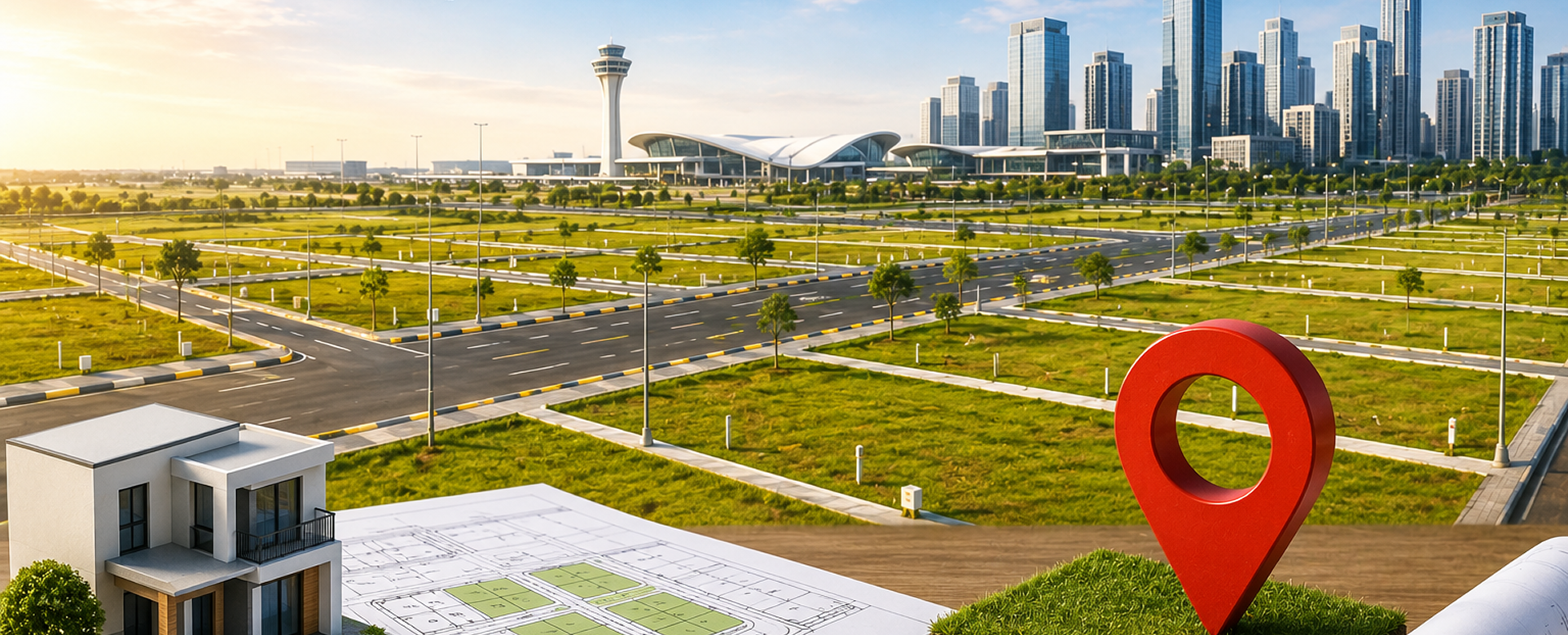
It’s India’s first planned green smart city, built from scratch with wide roads, underground cables, and an international airport on the way. And right now, Dholera residential plots are priced quite low compared to other cities because Dholera is still developing.
But here you need to understand that buying land isn’t like buying a phone on Amazon. There are steps, documents, and questions involved that you must ask before you hand over your money. In this guide, we will cover everything step by step.
Why First-Time Investors Are Betting on Dholera
Dholera is a part of the Delhi-Mumbai Industrial Corridor, backed by both the central government and the Gujarat government. It means roads get built, power lines go up, and the city actually takes shape instead of staying a dream on a brochure.
Here are a few things that are happening in Dholera right now.
- The Dholera International Airport is under construction, with Phase 1 expected by the end of 2026.
- A 6-lane expressway is connecting Dholera straight to Ahmedabad, with a metro line planned too.
- Solar power, underground drainage, and smart water systems are being built in from day one. They’re not added later as an afterthought.
All of this will increase land value. That’s why so many first-time buyers are looking at plots in Dholera Smart City.
The Step-by-Step Process to Buy a Plot in Dholera
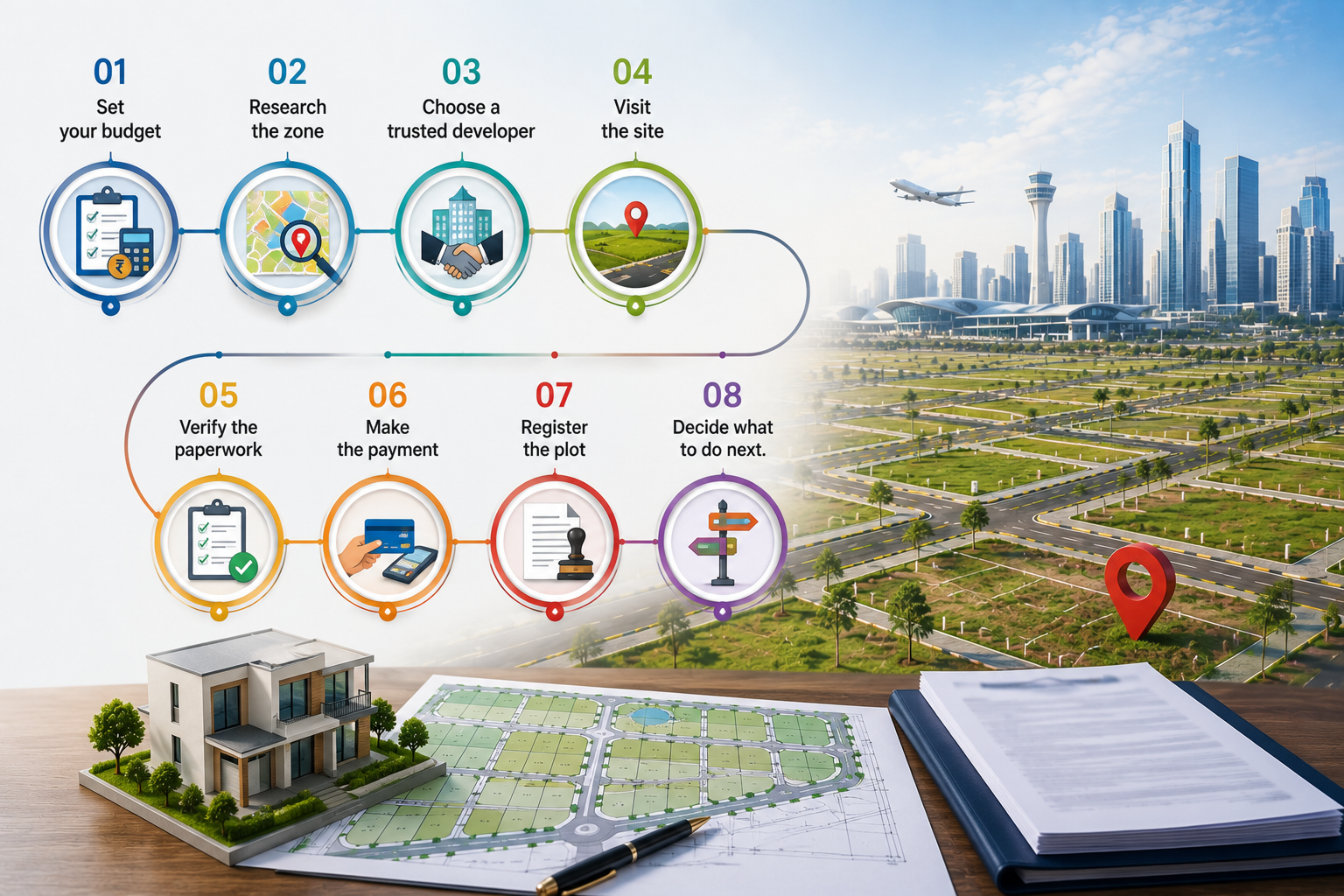
Let’s take a quick overview of the plot-buying process in Dholera.
- Set your budget
- Research the zone
- Choose a trusted developer
- Visit the site
- Verify the paperwork
- Make the payment
- Register the plot
- Decide what to do next.
Now, let’s understand each step in detail.
Step 1: Decide Your Budget and Your “Why”
Before you consider buying a plot, ask yourself one question: why am I buying this?
Is it to build a home someday? Is it purely an investment you’ll sell in five years? Or is it something you want to hand down to your kids? Your answer decides how much you spend, which zone you pick, and how patient you’re willing to be.
Once you know your reason, set a realistic budget. Don’t overstress yourself with the budget. Remember, a smaller plot in a good location almost always beats a bigger plot in a forgotten corner.
Step 2: Research the Zone Instead of Only Price
Dholera SIR spans 920 square kilometers. That’s huge, and understand that every corner of it will not develop at the same speed.
Therefore, before you buy, check:
- How close is the plot to the airport road or the upcoming expressway?
- Is it inside a zone marked for residential use?
- Are schools, hospitals, and markets planned nearby?
You should go for a plot with a planned development and near the main growth corridor because it is usually a smarter buy.
Step 3: Choose a Reputed Developer
This step confuses more first-time buyers than any other. Anyone can put up a website and sell “plots in Dholera,” but not everyone can actually hand you one with a clean title.
So, before you commit to any project:
- Check if the developer is registered with GUJRERA (Gujarat’s real estate regulator).
- Ask for the plot’s layout approval and land-use certificate.
- Read reviews or talk to people who’ve already bought from them.
A trustworthy developer will always answer these questions. If someone pushes you to book a plot right away without answering basic questions, it’s a clear red flag. Don’t buy from them.
Step 4: Visit the Site Yourself
Photos can lie, and brochures can exaggerate, but your own eyes don’t.
That’s why before you pay a rupee, go see the plot. Walk the boundary. Check the road leading to it. Look at what’s actually being built around it, not just what’s promised on paper. A site visit takes a day and buying blind can cost you years of regret.
Step 5: Get the Paperwork Verified
You feel this step is boring, but it’s the one that protects you the most.
Make sure the title is clear. It means the plot has no disputes, no pending loans against the land, and no legal tangles. Ask for the land-use approval that confirms it’s zoned for residential purposes. If you’re unsure how to read these documents, get a local lawyer to check them. It costs a small fee and saves you from a massive headache later.
Step 6: Choose Your Payment Plan
If you’ve checked everything and feel everything is right, then the next step is to make the payment. Most developers offer two options: pay the full amount upfront or pay in easy instalments (EMIs) over a set period.
If you’re a first-time investor, an EMI plan is often the gentler choice. It spreads the cost and gives you some time to pay, instead of locking up all your savings at once.
Step 7: Complete the Registration
Once your payment terms are settled, the plot needs to be registered in your name with the local authorities. This is what legally makes the plot yours. Keep every receipt, every registered document, and every communication safely because you’ll need them if you ever sell the plot or pass it on.
Step 8: Plan What Comes Next
Congratulations! The plot is now yours.
What is the next step now?
Read on to understand it.
If you’re building a home, start with fencing the boundary so no one intrudes while you plan construction. If you’re holding it purely as an investment, just keep the documents safe and track how the area develops around you.
What You’ll Actually Need: Documents and Costs
Here are a few documents that you need to keep ready:
- Basic ID and address proof (Aadhaar, PAN, etc.)
- Funds for registration charges, which are separate from the plot cost
- A small buffer for documentation or legal verification fees
This is not complicated, but skipping it and figuring it out later always costs more time and stress than doing it upfront.
Mistakes First-Time Buyers Keep Making
Here are two common mistakes that most first-time buyers keep making.
- Buying based on photos and phone calls alone, without ever visiting the site.
- Trusting a developer’s word without checking their registration or the plot’s legal status. Both mistakes are completely avoidable, and if you keep a little patience at the start, it saves a lot of pain later.

Why Invest with a Trusted Developer Like Greentech Lifespace
All the above steps are important, but the fastest way to get them all right is to buy from a reputed developer.
Greentech Lifespace has simplified the entire process into something a first-time buyer can actually follow. You choose your plot, book a site visit, and their team handles the legal verification and paperwork alongside you. Payments come with flexible EMI options. And once the plot is registered in your name, they even provide after-sales support, from fencing to construction guidance.
Dholera SIR is a government-backed project that you can buy through a transparent and GUJRERA-registered developer. It transforms your hopeful investment into a safe investment.
Ready to Take the First Step?
Buying a plot feels simple once you know the steps. Set your budget, research the zone, verify everything twice, and then make the payment.
Greentech Lifespace makes the entire process simple, from choosing the right plot to handling the paperwork and registration for you.
Get in touch for a free consultation and site visit. Take your first step toward owning land in one of India’s most promising smart cities.